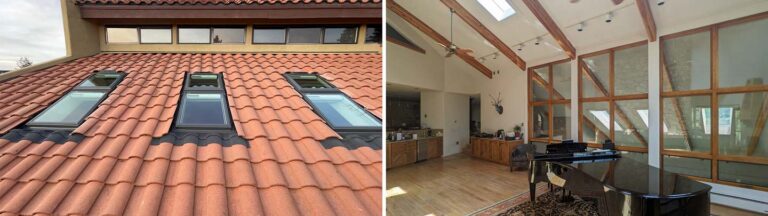
Commercial Skylight Repair

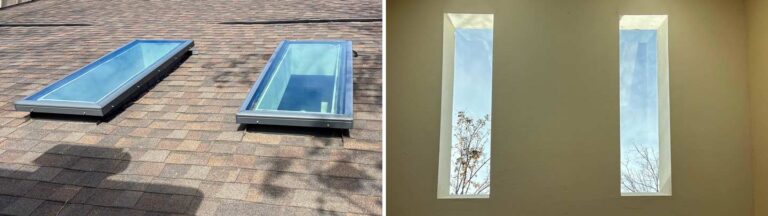
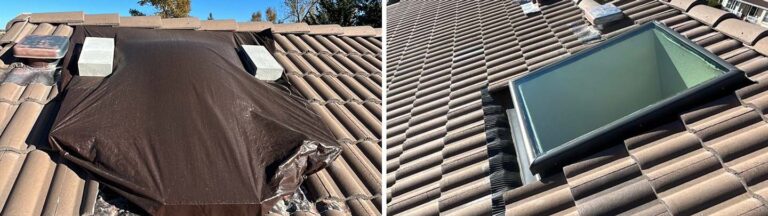
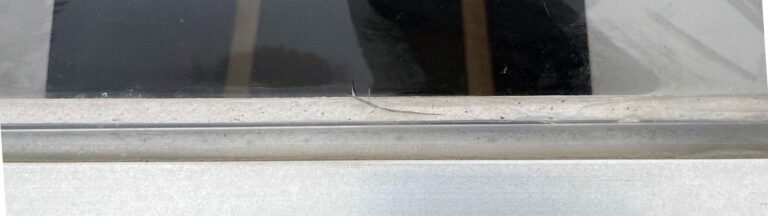
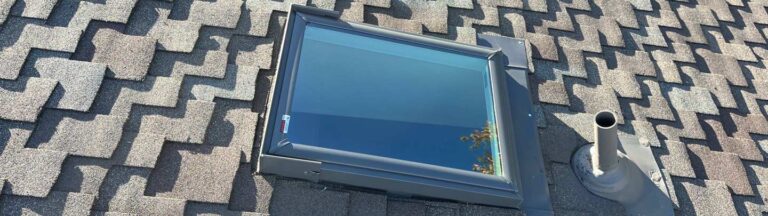
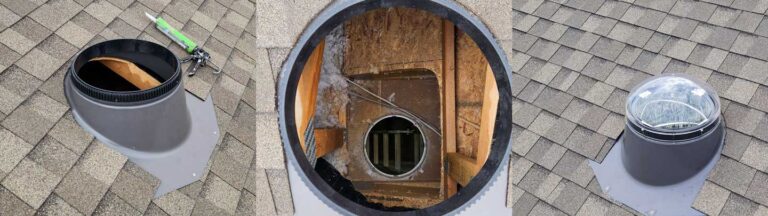
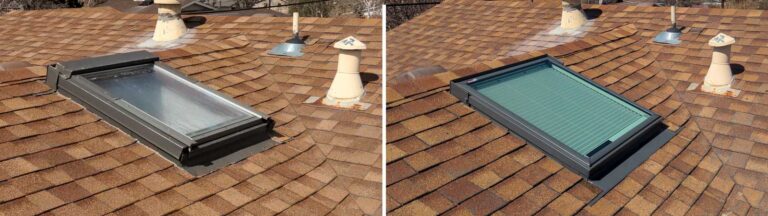
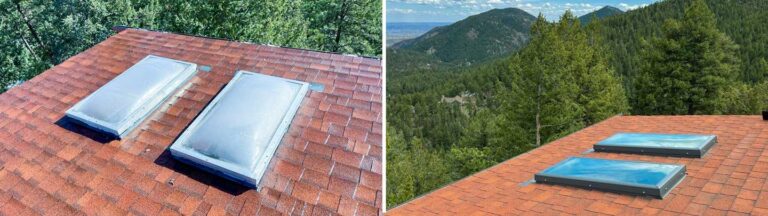
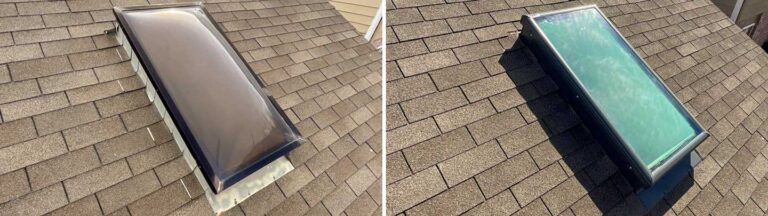
Commercial Skylight Repair costs a small fraction of replacement.

Before spending hundreds of thousands of dollars to replace your large commercial skylight, consider the option of a quality repair to your current skylight. Skylight Specialists bring over 25 years of experience to such repairs, frequently solving problems that others believe to be unsolvable. Of course if you just want a new commercial skylight for other reasons, Skylight Specialists can help you there too, but if you really want your existing skylight fixed, and fixed right, call the owner of Skylight Specialists, Rob Packard, at 1-866-SKYSPEC (1-866-759-7732), for a free telephone consultation or email us; rob@skyspec.com. We're available to solve your commercial skylight problems all over the country. And of course if you are in Colorado we can help you with your residential skylights as well.


July 02, 2009

Grocery Store Skylights

Interesting article on the reasons skylights should be in grocery and/or retail stores.
This blog is part of a series from the 2009 Climate Corps fellows. The program, from partners EDF and Net Impact, pairs MBA students with companies to identify energy efficiency opportunities and develop actionable strategies that help host companies reduce costs, energy use and greenhouse gas emissions.
– 
Editors Note

The paragraph below is found in the article written by Christopher Anderson (See the link below)

I’ll likely recommend a skylight retrofit project that may increase sales, reduce energy spend, and cut emissions.  Natural light is free and has long been known to be the best form of light available.  Numerous studies have shown improvements in employee morale, productivity, and even increased retail sales, all attributable to natural light.  Though either initially not considered or deemed not viable, I've changed some minds through my even conservative analysis.  If skylights were retrofitted at a third of Ahold USA stores, we'd likely save more than 13,000 metric tons of CO2 per year with a five year net present value nearing $30 million.


July 02, 2009

Failed Kalwall Skylights

We are seeing more and more failed Kalwall Skylights

We received another call today from a hospital that had Kalwall installed when it was built and are now having a bad smell near the skylights. This is caused by water penetrating through the gasket seals and/or directly through the fiberglass itself which then sits inside the panels and putrefies.

This is exactly what happened in 2008 at a North Carolina building owned by Duke Energy. We had to remove three old skylights and install new polycarbonate skylights while the building was still occupied.

Contact us for more information if you have the same situation.


June 29, 2009

Skylight Poem

by Seamus Heaney

The Skylight

You were the one for skylights. I opposed
Cutting into the seasoned tongue-and-groove
Of pitch pine. I liked it low and closed,
Its claustrophobic, nest-up-in-the-roof
Effect. I liked the snuff-dry feeling,
The perfect, trunk-lid fit of the old ceiling.
Under there, it was all hutch and hatch.
The blue slates kept the heat like midnight thatch.

But when the slates came off, extravagant
Sky entered and held surprise wide open.
For days I felt like an inhabitant
Of that house where the man sick of the palsy
Was lowered through the roof, had his sins forgiven,
Was healed, took up his bed and walked away.


June 26, 2009

Clean Skylights Can Be Humorous

Invisible Skylights
After a quick broom-stick test, she thanked us for her new amazingly invisible skylights.

While on a family vacation, I received this email from one of my employees:

Marjorie Bruce (job 1335) called Trisha to say that our rep (Dave) just took off her old skylights and left without installing the new ones. “Now I’ve got two empty holes and a storm is on its way”.  Trisha give her Dave’s cell number and she leaves him a message in a panic asking him to hurry back with her new ones.  Dave calls me stating that he did indeed replace them with FCMs at 10 a.m. this morning.  I call the customer and she repeats that there is nothing up there.  After a quick ‘broom stick’ test, she thanked us for her new “amazingly invisible” skylights. 


June 23, 2009

Foot Bridges

Conservatek aluminum structures can provide the flexibility to design interesting projects similiar to this one
The organic and flowing geometry was not a formal response to the clients competition brief. Instead, its configuration is contextual. It is intended to provide multiple ways to appreciate the river.
– 
Manuela Gatto, Project Architect
Zaha Hadid Architects

Here is an interesting article about foot bridges and the belief that they do more than get you across and obstruction.

We provide aluminum structures and polycarbonate skins to enclose these type of structures.

This project has an exterior CPI polycarbonate skin.


June 19, 2009

DTC Rotary Helps Deliver Clean Water

Bio-sand filters clean dirty water preventing diseases

Puerto Plata, Dominican Republic - In 1991, Bob Hildreth drilled a well for his new home here. Not long after, people lined up at the spigot alongside his house. Potable water, he’d discovered, was in short supply.

Eighteen years later – the longest time this former US Army aviator has spent in any one place – Mr. Hildreth devotes half his time to his jewelry business, Joyería las Americas, and the other half getting durable, low-tech water filters into the island's barrios.

Moises Velasquez-Manoff

Worldwide, at least 1.1 billion people don't have access to safe drinking water, according to the World Health Organization, and 2.4 billion lack basic sanitation. Some 1.8 million people die each year from diarrhea, which has been tied to unsafe drinking water – the majority of them children in developing countries.

Given that these losses are preventable, potable water doesn't seem to get the attention it deserves, says Mark Sobsey, professor of environmental sciences at the University of North Carolina at Chapel Hill. "Priorities are higher for other development activities than this," he says. "Sanitation, especially, is not very sexy."

Even piped-in water isn't necessarily safe, Hildreth says. In the developed world, constant water pressure keeps whatever's lurking outside the pipes at bay. In the developing world, however, where power outages are common, water pressure drops and at times even reverses, sucking in raw sewage that's often outside. When the system begins pumping again, it's delivering contaminated water.

"Point-of-use water treatment needs to be adopted by all the developing countries in the world," Hildreth says.

Funded principally by Rotary clubs, his organization – Project las Americas – has delivered 19,000 BioSand filters. One $50 filter cleans 120 gallons of water daily and lasts for decades. In studies, Dr. Sobsey has found that BioSand filters can reduce diarrhea by 47 percent. "You're almost certainly reducing mortality," he says.

Developed in the 1990s by Dr. David Manz, then at the University of Calgary in Alberta, BioSand filters use sand and the bacteria that grow on it to filter water. Users pour water through a diffuser into a gently tapering, belly-high container. (A traditional container made from cement weighs 250 lbs., but a new plastic container weighs just 10 lbs.)

Water passes through 20 inches of sand that comes directly from a quarry. The sand's tiny cracks and chambers filter out microbes. A layer of "good" bacteria forms at the sand's surface. This living film feeds on and removes viruses, bacteria, and parasites. "The technology is so robust that you can screw it up, and it will still keep functioning," Hildreth says.

Two hours inland, in the town of Jarabacoa (pop. 70,000), Lisa Ballantine works on the same problem using a slightly different tool: a ceramic pot filter. Smaller and lighter than the BioSand filter, hers fits into a five-gallon bucket. Pour water into the U-shaped receptacle, and it percolates through porous clay at a rate of two to three quarts per hour. Filters cost $30 to sponsor; Dominicans can buy them directly for $25. "The thing I like about [the] water [problem] is that we can solve it," she says.

Originally from the Chicago area, Ms. Ballantine came to Jarabacoa as a missionary in 2000. After seeing the poverty surrounding her, she wanted to provide practical help. So after her mission was over, she studied ceramics at Northern Illinois University and, in 2006, she returned with her ceramic pot filter idea.

The basic design is nearly two centuries old. Some 170 years ago, amid concerns about cholera, Queen Victoria asked London's Royal Doulton china company to design a water filter. Versions of its design are now used in places such as Cambodia and Honduras.

With help from Manny Hernandez, her ceramics mentor at Northern Illinois, Ballantine has improved on the design, she says. Ceramic filters typically are coated with silver particles. The silver's ionic charge kills microbes on contact. But rather than painting the silver onto the pot, Ballantine mixes it – along with fine sawdust no greater than 1/50th of a human hair in diameter – directly into the clay. The sawdust burns off, leaving minuscule silver-coated chambers. Microbes passing through come into more contact with the silver, and the filter has a much longer life – about five years, she says.

With her partner, Tracy Hawkins, who works in Tanzania, she's founded Filter Pure. Lifelong potter Radhamés Carela from nearby Moca runs her factory. Their goal: Create a model for making high-quality filters with low-tech equipment that's exportable anywhere. At full capacity, the factory can produce 1,000 filter per month. So far, she's given out more than 11,000 filters in the Dominican Republic.

On a sunny March day, Ballantine drives her pickup truck into a muddy, flood-prone neighborhood called "la joya de Jarabacoa." Today, she's giving out filters donated by a church in Streamwood, Ill. A jostling crowd of children forms around the truck. Adults emerge from hammered-together shacks to ask for them.

Typically, residents here buy water from passing trucks that sell it in large plastic jugs. The quality of that water can vary greatly.

But with monthly incomes here averaging about $200, buying a $25 filter can still seem too expensive. Resident Estamilado Durán estimates that of the 300 families in the neighborhood, perhaps five or 10 could afford it.

Ballantine is undeterred. The filter may seem expensive, she tells them in Spanish, but if they account for what they spend on bottled water now – $171 per year per family, she estimates – the savings are readily apparent.

By comparison, using a filter would cost a family less than 2 cents per day, she says.

June 18, 2009

Green Skylights

Natural daylighting is a source of energy

Below is a link to an article that speaks about residential skylights.

David Johnston is the founder of the green consulting firm What's Working, Inc., the author of multiple books on green remodeling, (including the Nautilus Award winner Green Remodeling: Changing the World One Room at a Time


June 15, 2009

Commercial Skylights

One of the reasons we are experts at what we do
Being inventive is not just about solving problems, its about solving problems no one else sees.
– 
Unknown

We see things that others don't and that is why we don't always need to replace the commercial skylight.

We also have the experience and skills to do the repair successfully and most importantly we have the technicians that have been with our company for decades.


June 15, 2009

CPI Daylighting

Bridging the Gap
The site was envisioned as a link between the retail core and Pikes Market on the other side; there is a huge amount of people moving back and forth between those areas, we feel [the cladding] beautified the project. This is really important for the City of Seattle in this iconic piece of downtown
– 
Lee R. Winn
Winn and Associates

Spanning the corner of the most populated thoroughfare in downtown Seattle, the 351,000-sq.-ft. 3rd and Pine Parking Garage bridges the gap between the downtown shopping district and the local farming merchants of Pike Place Market. Mirroring a larger city-wide effort to revitalize the area, the 50-year-old garage was ready for a new look.

     “Enhancing the exterior of the garage would further shield the layers of cars inside and provide a more finished look for the building, while helping us attract a high-end tenant in the retail-level space,” said Bob Beauchemin, senior vice president of Portland-based Avalon Holdings, the garage’s owner. “The biggest challenge was that we were working within an existing structure. We had to come in and say, ‘How can the cladding fit over the existing structure like it was made for it?’”

     While searching for a shell that could both provide a functional backdrop for urban-style retail signage and follow the structure’s curve, architect Lee R. Winn of Winn Associates (formerly part of Sienna Architecture) discovered CPI Daylighting’s single-glazed 10mm Pentaglas® system.

  CPI Parking Garage Retrofit

   “This product allowed areas of the garage to be enclosed, while keeping others open for ventilation,” said Winn. “We found that it was visually pleasing, which would still allow the life inside and the structure to show, but also provide a backdrop for building signage which would provide an additional source of revenue for the owner.

     “We were able to work with CPI to curve the corner pieces as opposed to segmenting them, which made for a much better solution that actually allowed the building’s curve to translate through the CPI product, creating a seamless translation of the building,” said Winn.

     The two-phased construction began in July of 2008 with the installation of 24,000 sq. ft. of 10mm Pentaglas® developed by CPI Daylighting with aluminum supports that tie each panel back to the concrete ramp portion of the parking garage. This allowed large, seamless panels weighing less than 2 lbs. per square foot to be installed from the first to the ninth floor inside out, keeping the construction schedule on track and promoting safety.

     The Ice White Matte glazing of the Pentaglas® creates an almost “Times Square” look that is doing its own part to bring the neighborhood back since project completion in early April 2009.

     “The site was envisioned as a link between the retail core and Pike’s Market on the other side; there’s a huge amount of people moving back and forth between those areas,” said Winn. “We feel [the cladding] beautified the project. This is really important for the City of Seattle in this iconic piece of downtown.”

June 03, 2009

Columbine High School Skylight Project

An example of adaptive re-use in a famous educational institution

Columbine High School is a good example of an adaptive re-use project. Columbine has become synonymous with the tragedy that occurred there. As a parent of recently graduated children, I have been in the school many, many times and as someone in the daylighting industry I did

Columbine High School Skylight

notice the beautiful skylight over the commons area. Through the adaptive re-use project there's a brand new library and a new cafeteria with a ceiling that extends into where the second floor library used to be located. Murals of aspen trees reaching to the sky in memory of the victims hang from the atrium ceiling. The CPI skylight, a low rise barrel vault lets in translucent light from the polycarbonate green panels that light up the staircase to the second floor. It offers a different kind of light into a place darkened by a horrific act. The new light gives us hope, offers a new beginning and lights the way to the future. Everyone will always remember that dark day 10 years ago. But, light shines through.

To all the survivors and to the victims of April 20 1999, Skylight Specialist Inc. and CPI Daylighting salute you. We will not forget.

We are Columbine


Syndication OptionsRSS (Rich Site Summary) Feed Atom Feed OPML (Outline Processor Language) Feed MYST-ML (MyST Markup Language) Content Feed MS-Office Smart Tag Subscription